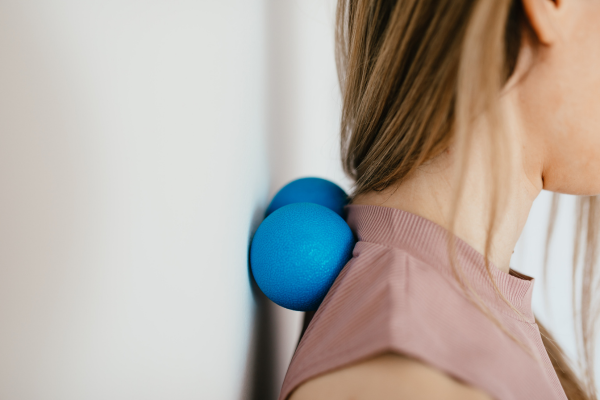
As therapists, we will recommend using a massage ball as a way to help the recovery or rehab process and as a way for clients to look after themselves long term. However, there are some simple mistakes that we see people commonly making that can stop or hinder their progress.
Massage balls can be a really helpful tool for self-massage and help give some relief or release to common areas of tension in the body.
3 Common Massage Ball Mistakes:
- Too Long – It’s so common to hear people spending too much time on the massage ball. An easy rule to remember is that more isn’t always best. We want to help the muscle relax and feel better, not make it aggravated and angry, which is exactly what happens when we spend too long on one spot or do too much in one area.
What to do instead: My best recommendation is to only spend a couple of minutes (2-3 min) on each area at a time.
- Too Hard – The same thing happens here, harder doesn’t = better. Excessive pressure on the muscle or tissue being worked on can cause further damage and increase sensitivity. Sometimes bruising can even occur in the tissue if you go too hard.
What to do instead: If you were to grade the pressure out of 10, try not to go over 7/10. The tension should be enough to help you relax the muscle and give you that feedback, but not so hard that you can’t tolerate it or are tensing elsewhere to ‘get through it’.
- Too Specific – You might be able to find the ‘spot’ with the ball, but that doesn’t mean you should just sit with the ball directly over it. If you have an area that is inflamed or sensitive, this can make it worse.
What to do instead: Try to use the ball on the surrounding areas instead and help release tension around the ‘spot’. You’ll find this helps relieve that spot without having to directly target it.
If you have any questions about best practices and self-massage techniques, let us know!
We’d love to help.
Nathan Spring
Spring Strength Therapy